Keynote Speakers
Discover our keynote programme: speaker bios, talk titles, and abstracts.

Co-leads People-Centric AI
Bio
Katja Hofmann is a Partner Research Manager at Microsoft Research Cambridge, where she co-leads the People-Centric AI research area. Her work focuses on generative AI, interactive media, and game intelligence, combining advances in machine learning with human-computer interaction, design, and social science.
With her team she aims to create AI systems that empower people through collaboration, creativity, and play – unlocking new forms of interaction and addressing complex real-world challenges.
Read abstract
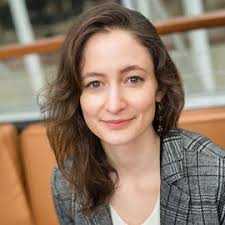
Senior researcher, Microsoft Research
Bio
Dr. Madeleine I. G. Daepp is Visiting Director of Civic Innovation at Public Democracy America, where she advises nonprofits on navigating the AI transition, and senior researcher at Microsoft Research studying the impacts of generative AI on global democracies. A civic technologist with a Ph.D. from MIT, her work centers on collaborating with communities and leveraging novel technologies to solve problems in shared public spaces. Dr. Daepp has written invited perspectives on the societal impacts of AI for The Economist and Nature Computational Science (forthcoming) and published in peer-reviewed venues across computer science, public health, and urban planning.
Read abstract

About the award
The Keith van Rijsbergen Award is presented at ECIR in honour of Professor Keith van Rijsbergen, a pioneer in modern information retrieval and a strong advocate of the development of models and theories in information retrieval. It recognises researchers who have made significant contributions in using theory to develop new IR models, paradigms, concepts, or metrics – addressing foundational aspects of the field and opening up new ways of thinking about information retrieval.
The 2026 recipient and their keynote details will be revealed during the conference. Stay tuned!