
Tutorial Day & Welcome Reception (AULA, TU Delft)
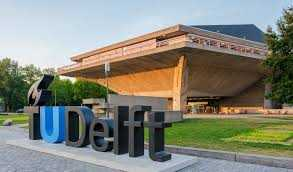 | Merkelweg 5 E-mail: Aula-CREFM-balie@tudelft.nl |
The TU Delft Aula is a landmark of postwar modernist architecture, designed by Dutch architects Jo van den Broek and Jaap Bakema and opened in 1966. Its striking Brutalist form - defined by raw exposed concrete, bold geometric volumes, and a dramatic cantilevered auditorium - has made it one of the most recognizable buildings in the Netherlands, recognized as a national monument since 2009. At the heart of TU Delft's campus, the Aula has long served as the university's central gathering place for academic ceremonies, conferences, and cultural events, hosting a 1,300-seat main auditorium alongside lecture halls and congress facilities.
Main Conference (Lijm & Cultuur)
Where Industrial Heritage Meets Digital Discovery
 | Rotterdamseweg 272 Phone: +31 15 262 94 00 |
We are proud to host ECIR 2026 at Lijm & Cultuur, one of the most distinctive venues in the Netherlands. Once the beating heart of the Royal Dutch Glue and Gelatin Factory, this historic industrial complex has been reimagined as a vibrant space for culture, innovation, and knowledge exchange.
Just as Information Retrieval connects people with the knowledge they seek, Lijm & Cultuur connects Delft's industrial past with its high-tech present - bridging history and innovation in both form and function. With its bold architecture and raw character, the venue invites fresh thinking, cross-disciplinary dialogue, and experimental ideas - all core to ECIR's mission.
A Fitting Space for Exploration
Set on the banks of the Schie canal and just a stone's throw from TU Delft, the venue offers expansive halls for plenaries and parallel sessions, dedicated rooms for workshops and posters, and plenty of informal space to spark discussion. Its industrial scale and creative edge reflect the scale and ambition of our field - building smarter systems to retrieve, rank, and understand information in an increasingly complex world.
At ECIR 2026, Lijm & Cultuur becomes more than just a backdrop - it's a metaphor for transformation, connection, and the power of retrieval.
 |  |